


Key Takeaways
- Shift to Answers: Users are no longer just searching; they are asking. Your content must provide direct, synthesized answers to win visibility in AI tools like ChatGPT and Google AI Overviews.
- Three New Pillars: Success in 2026 relies on Generative Engine Optimization (GEO), Answer Engine Optimization (AEO), and AI Optimization (AIO), not just traditional SEO.
- Entity First: Rankings are now driven by brand authority and “entities” (concepts known to Google’s Knowledge Graph), rather than simple keyword matching.
- Structure Matters: Using tables, lists, and direct definitions (“Answer-First” formatting) increases the likelihood of being cited by AI by up to 30%.
Redefining Success in a Synthetic Digital Ecosystem
The digital landscape of 2025 is undergoing a tectonic shift in how information is discovered, processed, and presented. The question “How good is this post?” can no longer be answered by simple keyword analysis or backlink counts. In the modern environment, “good” content is inextricably linked to its ability to be “understood” by Large Language Models (LLMs) and synthetic search engines.
The traditional model, ranking on the first page of Google (“the ten blue links”), has been replaced by a battle for citations in direct AI responses. Users are no longer “searching” in the classic sense; they are “asking” and expecting synthesized, accurate, and instantaneous answers. This shift requires a radical transformation of content strategy. Your content now competes not just with other blogs, but with an AI’s ability to aggregate millions of sources into a single response. In this context, a “good” post functions as a structured entity of knowledge, optimized for machine-reading, semantically rich, and authoritative. To stay competitive, we must adopt the three critical pillars of modern visibility: Generative Engine Optimization (GEO), Answer Engine Optimization (AEO), and AI Optimization (AIO).
This post provides an in-depth analysis of the factors that determine visibility and authority in the era of AEO (Answer Engine Optimization) and GEO (Generative Engine Optimization). Through a detailed breakdown of technical, semantic, and structural elements, we address your questions around gaps, rankings, and potential improvements, delivering a comprehensive framework for aligning your content with 2025/26 standards.
The Convergence of Disciplines: From SEO to GEO, AEO, and AIO
To accurately diagnose content, we must understand the complex matrix of modern optimization. The industry is in flux, with multiple acronyms competing for dominance, yet all pointing toward a single goal: optimization for machine intelligence.
The Taxonomy of New Digital Marketing
Traditional SEO (Search Engine Optimization) remains the foundational layer. Without a solid technical infrastructure, fast load times, and a logical site hierarchy, more advanced forms of optimization are simply not viable. But SEO is now only the first layer in a multi-layered strategy. Above it sit AEO and GEO – disciplines that require a fundamentally different approach to information creation.

What is Generative Engine Optimization (GEO)?
Generative Engine Optimization (GEO) is the strategic process of structuring content to be retrieved, summarized, and cited by generative AI models such as ChatGPT, Perplexity, and Google’s Gemini.
Why it matters
Unlike traditional search engines that rank a list of websites, generative AI tools synthesize a single, comprehensive answer from multiple sources. Your goal is no longer just a click; it is to become a “cited source” within that generated answer. If your content lacks the structure AI prefers, it risks being excluded from the synthesis, rendering your brand invisible to the user.
Optimization Tactics
- Write for “Query Fan-Out”: AI breaks complex questions into sub-questions. Cover a topic comprehensively by addressing related sub-topics (e.g., pricing, benefits, risks) in the same article to satisfy multiple intent branches.
- Cite Sources & Statistics: AI models prioritize content that looks authoritative. Include data points, citations, and quotes to increase your “Trust Integrity Score.”
- Format for Summarization: Use clear headings and short, concise paragraphs. AI prefers text that is easy to chunk and summarize.
What is Answer Engine Optimization (AEO)?
Answer Engine Optimization (AEO) focuses on optimizing content to provide direct, immediate answers for “zero-click” platforms, such as Google’s AI Overviews, Featured Snippets, and voice assistants (Siri, Alexa).
Why it matters
Zero-click searches are dominating. Users are increasingly finding what they need directly on the results page or via voice search, without needing to visit a website. To maintain visibility, you must win the “answer box.” AEO ensures your content is the one selected to provide that immediate solution.
Optimization Tactics
- The “Inverse Pyramid” Method: Start every section with the answer. Don’t bury the conclusion. Place a 40-60 word definition immediately after the heading.
- Target “People Also Ask” (PAA): Use tools to identify common questions and use them verbatim as H2 or H3 headers.
- Conversational Tone: Optimize for natural language queries (e.g., “How do I fix…” instead of “Fixing method”). This aligns with how users speak to voice assistants.
What is AI Optimization (AIO)?
AI Optimization (AIO) is the overarching discipline of making your entire digital footprint “machine-readable,” ensuring that Large Language Models (LLMs) can accurately ingest, understand, and reproduce your brand’s information.
Why it matters
AI is the new interface for information discovery. If your content is not in the training data or accessible to live-browsing AI bots, you do not exist in the modern search ecosystem. AIO ensures your data is structured, consistent, and trustworthy enough to be included in the AI’s knowledge base.
Optimization Tactics
- Structured Data (Schema): Use comprehensive JSON-LD markup to explicitly tell machines what your content is (see the technical section below).
- Entity Consistency: Ensure your brand name, products, and key personnel are described consistently across the web (LinkedIn, Crunchbase, your site) to build a solid “Knowledge Graph” entity.
- Proprietary Data: Publish unique research or statistics. AI models crave unique data points and will cite the original source.
The New SEO Framework: A Comparison
The transition from 2020 to 2025 requires a shift in mindset. Here is how the game has leveled up:
| Feature | Traditional SEO (Legacy) | Modern Framework (2025/26) |
| Primary Goal | Ranking #1 on Google | Being Cited in AI Answers |
| Content Focus | Keywords & Word Count | Entities & Information Gain |
| User Interaction | Clicking Links | Zero-Click / Conversational |
| Measurement | Organic Traffic / Rankings | Brand Mentions / Share of Voice |
| Technical Core | Meta Tags & Site Speed | Schema Markup & Vector Embedding |
| Authority Source | Backlinks | E-E-A-T & Authorship |
“It’s All Optimization”: Consensus and Divergence
Despite the proliferation of acronyms, expert consensus suggests that these are not mutually exclusive disciplines, but rather “the same wave hitting us from different angles.” Historical analysis shows that a similar debate took place 30 years ago with the emergence of the term SEO. The key difference today lies in the search mechanism itself. While traditional SEO optimized for keyword matching, GEO and AEO optimize for intent recognition and information extraction.
Your post must satisfy all of these criteria simultaneously. It needs to be technically sound (SEO), direct and useful (AEO), and semantically authoritative (GEO). A shortfall in any one of these areas will result in reduced visibility.
The Shift from Search to Question
A fundamental shift in user behavior is the move from “searching” to “asking.” Users now expect to have a conversation with the interface. Instead of queries like “best running shoes,” they ask, “Which running shoes are best for flat feet and a sub-4-hour marathon?”
This shift dictates the need for highly specific content that anticipates complex, multi-layered questions. If your post addresses only broad, generic queries, it becomes invisible to this new class of long-tail queries favored by AI systems.
Mechanical Anatomy: How LLMs “Read” and Understand Content
To determine what a post “lacks,” we must understand how a machine “sees” it. LLMs do not read text like humans; they process tokens, vectors, and probabilities. Understanding this process is critical for GEO.
Tokenization and Information Processing
The first step in machine understanding is tokenization. An LLM breaks your text into smaller units – tokens (words, subwords, punctuation marks). Models are trained to predict the next token in a sequence. Text that is overly complex, uses archaic language, or has irregular syntax makes prediction harder and increases the model “perplexity” in a negative way.
Optimization for tokenization requires clear, precise language. Ambiguous sentences and excessive use of pronouns without clear antecedents (e.g., repeatedly using “it” or “that” instead of naming the subject) make it difficult for the model to retain context. For your post, this means each section should be as semantically self-contained as possible. If an AI extracts (chunks) a paragraph from the middle of your text, that paragraph must make sense on its own.
Vector Search (Embeddings) and Semantic Proximity
After tokenization, the text is converted into vectors, which are numerical representations in a high-dimensional space. Related concepts are located close to one another in that space. For example, the vectors for “king” and “queen” are mathematically close, as are “Paris” and “France.”
When a user asks a question, the AI converts that question into a vector and searches for content chunks whose vectors are most closely aligned with the query vector. This is the essence of semantic search. If your post uses keywords but fails to cover related concepts and entities that form a complete semantic context, its vector will be “far” from the query vector, even if it contains the exact keyword.
To improve your post, you must increase its “semantic density.” This means not merely mentioning a topic, but including all relevant attributes, related terms, and contextual information that define the entity within the vector space.
RAG (Retrieval-Augmented Generation) and the Importance of Extraction
Most modern AI search systems (such as Bing Chat and Google SGE) use a RAG architecture. This process has two phases:
- Retrieval: The system searches an indexed document base to find relevant facts.
- Generation: The system uses those retrieved facts to generate a coherent response to the user.
A critical failure point for many posts is the retrieval phase. If information in your post is “buried” in long paragraphs, unstructured, or unclear, the retrieval system will not identify it as a relevant fact. As a result, it will not be passed to the generative model, and your brand will not be cited. Optimizing for RAG requires structuring content so that facts are easily “extractable” from the surrounding text—using lists, tables, and clear definitions.
Content Diagnostics: Structure, Format, and Clarity
Based on the mechanisms outlined above, we can precisely analyze what defines a “good” post in 2026. If your post does not follow strict structuring rules, it is likely to lack the capacity to rank highly within AI-driven systems.
The “Answer-First” Principle (Inverse Pyramid)
The single most important factor for AEO is the placement of answers. The journalistic principle of the “inverse pyramid” must be applied to every subheading.
- Rule: Immediately after the main title (H1) or a subheading (H2), the very first sentence must deliver a direct, concise answer to the question implied by that heading.
- Implementation: If the heading is “What is GEO?”, the first sentence must not be “In the world of marketing, there are many acronyms…”, but rather: “Generative Engine Optimization (GEO) is the process of optimizing content to be cited by generative AI models.”
- Rationale: AI models strongly prefer content that leads with the answer. Paragraphs that begin with direct assertions have a significantly higher chance of being selected as Featured Snippets or used as generated answers.
If your post relies on a narrative style that builds suspense or gradually works toward a conclusion, it is suboptimal for AI. Each section should begin with the conclusion, followed by supporting evidence and explanations.
Structuring for Machine Readability
Machine readability is a prerequisite for visibility. LLMs process structured data far more efficiently than unstructured, free-form text.
| Structural Element | Function in AI Processing | Recommendation |
| H2/H3 Questions | Act as clear intent signals. | Rephrase declarative headings into questions. This directly maps to user queries. |
| Lists (Bulleted/Numbered)) | Facilitate easy extraction of steps. | Convert every set of information (bullet points, steps, benefits) into lists. AI systems often copy lists verbatim into their responses. |
| Tables | Provide relational data. | Include at least one table that compares concepts, pricing, or features. Tables are a “gold mine” for RAG systems. |
| Bold Keywords | Help identify core entities. | Bold key phrases and definitions to visually and programmatically emphasize the importance of specific segments of the text. |
| TL;DR Summary | Quick overview for AI/Users. | Add “Key Takeaways” at the top of the article. |
Language Style and NLP Optimization
The writing style must strike a balance between expertise and a natural, conversational tone.
Conversational Nature: As search shifts toward voice and chat-based interfaces, queries become more natural and conversational. Your content should reflect this tone. Use complete sentences, a clear subject–predicate structure, and avoid overly complex jargon that obscures meaning.
Avoiding “Fluff”: Empty filler text and words that convey no real information reduce informational density. AI models evaluate information gain. If your post is 1,000 words long but conveys the same amount of information as a competitor’s 300-word post, your content will be seen as less efficient and is likely to rank worse.
Entity Clarity: When referencing people, places, or products, use full names and clear definitions. Instead of “he said,” write “The Marketing Director, Joshua Dean, said.” This supports coreference resolution during machine reading and improves overall semantic clarity.
Authority and Trust: Building the E-E-A-T Profile
One of the most common shortcomings that prevents stronger rankings and citations is the lack of clear authority signals. In an era where AI can generate an infinite amount of text, Google and other search engines place a massive emphasis on E-E-A-T principles (Experience, Expertise, Authoritativeness, Trustworthiness). If your post lacks these signals, AI systems may treat it as an unreliable source, especially in YMYL (Your Money, Your Life) topics.
Proving Experience and Expertise
It is not enough to be an expert—you must prove it to the machine.
- Authorship: Anonymous content is a relic of the past. Every post must have a clearly identified author. The author bio should be detailed, linked to a LinkedIn profile, and include specific qualifications relevant to the topic at hand. This helps Google connect the content to a real person with a documented history of expertise (a Knowledge Graph entity).
- First-Hand Experience: Phrases that signal direct experience are extremely valuable. Examples include: “In our testing…”, “When I worked with client X…”, “The data we collected shows…”. These signals differentiate human, experience-driven content from generic AI-generated text. Google explicitly prioritizes content that offers unique perspectives or data not available elsewhere.
- Source Citations: Trust is built through association. Linking to authoritative external sources (research papers, official data, expert studies) demonstrates that your work is grounded in facts. This is a critical signal for algorithms responsible for information verification and fact-checking.
The “Surround Sound” Strategy and Brand Entities
For your post to be cited, the brand behind it must be recognized as an entity. AI models learn about the world by reading the entire web, not just your website.
- External Signals: If your brand or author is mentioned on relevant forums (Reddit, Quora), review platforms (G2, Capterra, Trustpilot), or in news coverage, AI systems register this as a signal of popularity and trust. These “third-party sources” are often decisive in AI-generated answers. For example, when a user asks “Is this trustworthy?”, AI will frequently scan Reddit and Trustpilot to shape its response.
- Data Consistency (NAP): Name, Address, and Phone number (NAP) must be consistent across the web. Inconsistencies create confusion within the Knowledge Graph and reduce system confidence in the entity.
Proprietary Data
The most reliable way to secure citations is to own data that no one else has. Original research, surveys, case studies, and internal statistics are pure gold for AI systems. When you publish proprietary data (e.g., “70% of users prefer X”), AI will repeatedly cite you as the primary authority whenever that fact is used in generated responses.
Entity SEO: From Keywords to Knowledge Webs
The traditional keyword-focused approach is outdated. Modern SEO is centered around entities—concepts with defined meanings and relationships within the Google Knowledge Graph. If you’re asking “what’s missing” from your post, there’s a strong chance it lacks deep entity optimization.
The “Strings to Things” Transition
Google’s “Things, not strings” philosophy means the search engine understands that “Austin” is the capital of Texas, not just a six-letter word. Your post must explicitly map these relationships.
Topical Clusters: Instead of focusing on a single keyword, your post should cover the entire ecosystem of entities related to the topic. If you’re writing about “coffee,” don’t mention only “coffee,” but also “Arabica,” “Robusta,” “caffeine,” “espresso machine,” and “Ethiopia” (origin). Referencing these related entities signals to AI that your content is comprehensive and in-depth.
Semantic Relationships: Use sentences that explicitly define relationships. For example: “Caffeine (subject) is an alkaloid (object) that stimulates the central nervous system (action).” This structure facilitates the extraction of knowledge triples (Subject–Predicate–Object), which form the foundation of AI knowledge bases.
Query Fan-Out: Breadth Dominance
“Query fan-out” is an advanced technique essential for success in 2026. When AI receives a complex query, it breaks it down into a “fan” of sub-queries in order to construct a complete answer.
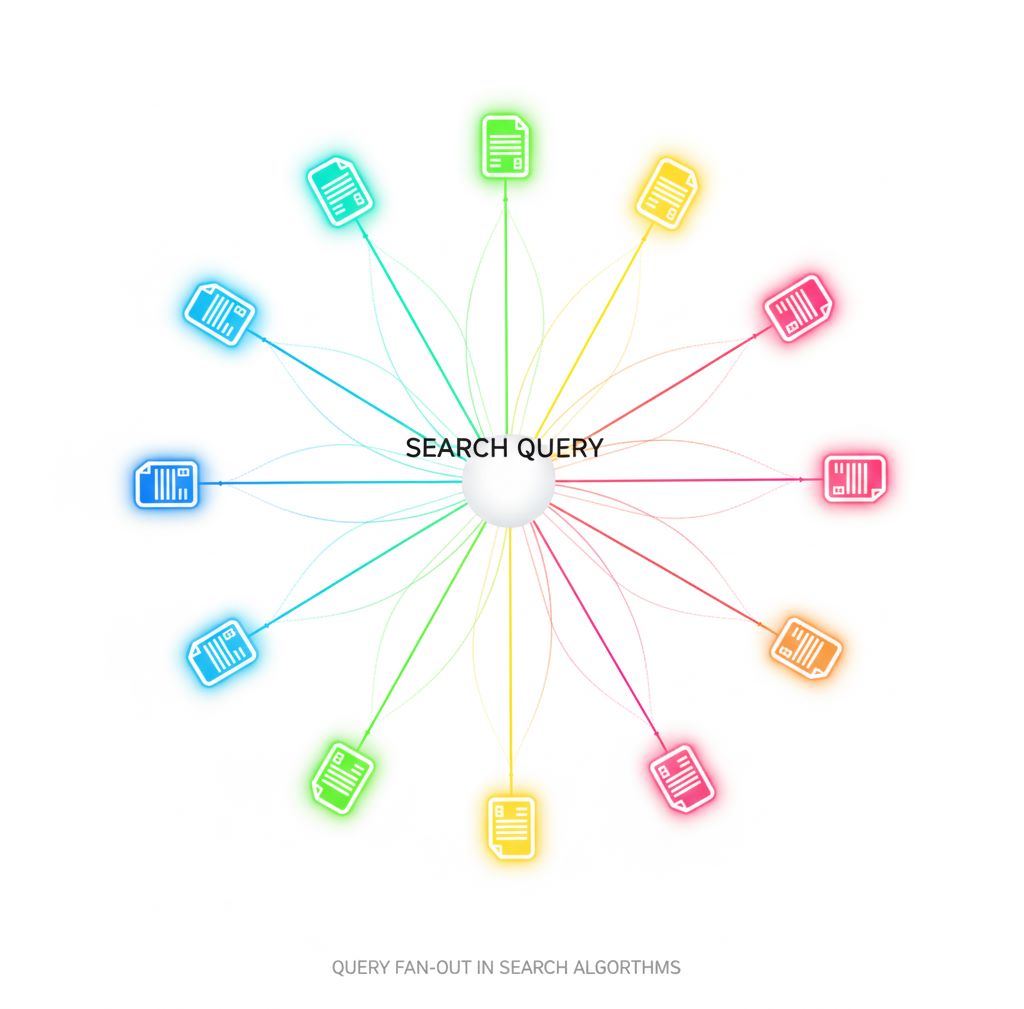
For example, for the query “How to start an e-commerce business?”, AI internally generates sub-questions such as:
- Platform selection (Shopify vs. WooCommerce)
- Legal requirements and registration
- Product sourcing and dropshipping
- Marketing strategies
If your post addresses only the general question and does not cover these specific “branches” of the fan, AI will favor sources that include dedicated sections for each sub-question.
Improvement: Identify the logical sub-questions that stem from your core topic and create dedicated H2/H3 sections for each. This significantly increases the likelihood that your post will be selected as a source for multiple components of AI-generated answers.
Technical Architecture: Speaking the Machine’s Language
Even the best content can remain invisible if it is not technically delivered in a way machines can understand. Technical shortcomings are a common reason why posts fail to reach their full potential.
Structured Data (Schema Markup) & JSON-LD
Implementing Schema.org markup is not optional; it is a critical layer of communication for AI systems. Schema markup provides explicit meaning to your content.
- FAQPage Schema: This is the most powerful weapon for AEO. It allows you to explicitly mark up questions and answers that AI systems can directly extract and display. Every informational post should include an FAQ section using this schema.
- Article / BlogPosting Schema: The foundational schema that defines the headline, author, publication date, and featured image.
- Nested Schema: An advanced strategy involves connecting schemas instead of using isolated code blocks. Define an Article, nest an Author (type: Person) inside it, and within the author define worksFor (type: Organization). This builds a clear hierarchy and relationship between entities, strengthening E-E-A-T signals.
Code Example (Conceptual JSON-LD with @graph): Using the @graph approach allows all entities on a page to be connected into a single coherent structure, which is superior for AI comprehension.
{
  "@context": "https://schema.org",
  "@graph": [
    {}
  ]
}
Technical Site Health
Beyond schema, core technical parameters must be flawless.
Crawlability: If Googlebot or AI bots (such as GPTBot) cannot access your content due to robots.txt blocks or poor internal linking, all effort is wasted. Verify that relevant bots are not blocked.
Rendering: Many modern sites rely on JavaScript. If critical content (especially answers) loads dynamically only after user interaction (e.g., clicking “Read more”), bots may not see it. Ensure Server-Side Rendering (SSR) or Dynamic Rendering for bots.
Multimodal SEO
With the growth of visual search (e.g., Google Lens), images and videos must be optimized.
- Images: Use descriptive file names (e.g.,
ai-search-optimization-diagram.jpginstead ofimg123.jpg). Alt text should describe the image’s content and context, not just keywords. AI uses OCR and object recognition to understand images. - Video: Include transcripts and use VideoObject schema with defined Key Moments. This enables AI to direct users to the exact segment of a video that contains the answer.
The Enhancement Protocol: Step-by-Step Guide
Based on this analysis, we have created a detailed action plan to transform your posts.
Phase 1: Restructuring and Formatting (Content Refactoring)
- Revise Headings: Review the post and convert all generic headings into specific questions. The goal is to have at least 50% of H2/H3 headings be real questions that users actually ask.
- Implement “Answer-First” Blocks: Under each H2 question, write a 40–60 word definition that directly answers the question. These blocks should be factual and free of marketing language.
- Introduce Structured Elements: Identify places in the text where items are listed and convert them into bulleted lists. Create at least one table that summarizes key data from the post.
- Add a TL;DR: At the very beginning of the post, include a 3–5 bullet summary that captures the essence of the content.
Phase 2: Deepening and Expansion (Entity & Coverage Expansion)
- Gap Analysis: Compare your post with the top three search results and the AI-generated answer for the same topic. Which entities and sub-questions do they cover that you don’t? Add the missing sections.
- Integrate Proprietary or External Data: If you don’t have your own research, find relevant statistics from trusted sources and incorporate them into the content with clear citations.
- Content Refresh: Verify that all information is up to date. Update dates, statistics, and references accordingly.
Phase 3: Technical Implementation (Technical Setup)
- Schema Generation: Use tools to generate JSON-LD code for FAQPage and Article schema. Validate the implementation using Google’s Rich Results Test.
- Author Optimization: Ensure the post includes an Author Box. If it doesn’t, add one with a photo, title, and relevant links. Connect the author to a Person schema.
- Speed and Mobile Checks: Test the page using Google PageSpeed Insights. Ensure a flawless mobile experience, as Google uses mobile-first indexing.
Phase 4: Distribution and Trust Signals (Off-Page Signals)
- Content Syndication: Share key insights from the post on LinkedIn, Twitter, and relevant Facebook groups, linking back to the original article.
- Link Building: Reach out to partners or industry publications and offer a guest post or expert commentary that references your research.
- Performance Tracking: Monitor not only rankings, but also appearances in “People Also Ask” boxes and AI-generated overviews.
Conclusion: The Diagnostic Verdict
Returning to the original question, “How good is this post?” — the answer lies in the degree to which it aligns with the principles outlined above.
- If your post is informative but structured as an unorganized “wall of text,” it is functionally invisible to AI systems in 2026.
- If it lacks clear authorship signals and cited sources, it carries a low E-E-A-T score and will not be referenced in sensitive or high-trust topics.
- If it does not use schema and structured data, it misses the opportunity for rich results and direct communication with machines.
The future belongs to those who recognize we no longer write just for people, but for the machines that serve them. Your goal is to become the “source of truth” in the AI’s synthesis of knowledge.
Sources Used in the Text
reddit.com GEO vs AEO vs AI — Which one is shaping the real future of SEO?
medium.com SEO vs AEO vs GEO vs AIO: What They Mean and How They Shape Your Online Visibility
cxl.com Answer Engine Optimization (AEO): The Comprehensive Guide for …
terakeet.com AEO vs AIO vs GEO – What’s The Difference?
en.wikipedia.org Artificial intelligence optimization
clearscope.io What Is AIO? A Beginner’s Guide to Artificial Intelligence Optimization
searchengineland.com The origins of SEO and what they mean for GEO and AIO
xponent21.com The Alphabet Soup of SEO: What AEO, AIO, GEO, and AISEO Mean for Your Strategy
reddit.com SEO vs GEO vs AEO vs AIO
mintlify.com GEO guide to optimize writing for LLMs – Mintlify
backlinko.com Entity SEO: How to Build Digital Brand Visibility in AI Search
locomotive.agency Rethinking SEO for AI Search: Introducing LOCOMOTIVE’s Query Fan-Out Tool
onely.com How To Optimize Content for LLMs
writesonic.com Google AI Overview Optimization: How to Adapt and Thrive in 2025
medium.com Most Important Things About Answer Engine Optimization (AEO) | by Jerry Grzegorzek
singlegrain.com Google AI Overviews: The Ultimate Guide to Ranking in 2025 – Single Grain
surferseo.com What is Answer Engine Optimization?
semrush.com What Is Query Fan-Out & Why Does It Matter?
searchengineland.com Timeless SEO rules AI can’t override: 11 unshakeable fundamentals
reddit.com How are you optimizing your content to get cited by Google AI Overview and other LLMs?
developers.google.com Top ways to ensure your content performs well in Google’s AI
backlinko.com How to Create an Effective SEO Strategy in 2026
reddit.com Ranking SEO tactics for 2025, plus one thing most people still ignore
diggitymarketing.com +3.7x Monthly AI Traffic [AI SEO Case Study]
found.co.uk Entity SEO Guide | Future-Ready SEO for AI Search – Found
mikekhorev.com 8 Tested Fintech SEO Strategies That Can Double Your Traffic
wpseoai.com What is the difference between keyword and entity?
singlegrain.com Entity SEO for AI Search Prioritizes Topics, Not Keywords
hivedigital.com The Query Fan-Out Method: Mastering the Complex Recipe of Modern Search
surferseo.com AI Search Study: Understanding Keyword Query Fan-out
semrush.com We Tested Query Fan-Out Optimization (Here’s What We Learned)
ipullrank.com Query Fan-Out, Latent Intent, and Source Aggregation
writesonic.com AI Mode Query Fan Out: How to Optimize Content for Google’s AI
brightedge.com Structured Data in the AI Search Era
whodigitalstrategy.com SEO With Nested JSON-LD Schema
salt.agency A beginners guide to JSON-LD Schema for SEOs
growthnatives.com Top JSON-LD Schema for SEO Patterns Driving AI Search Visibility
boomcycle.com Advanced SEO Strategies for 2025: What Actually Works Now
developer.tenten.co Multi-Modal Content for AI SEO: The Definitive 2025 Guide
lumar.io Multimodal Search in 2025: Image, Video, & Voice Search [SEO News] – Lumar